
Distinguished Seminar Series Sponsored by the Texas Quantum Institute (TQI) with Tian Zhong from the University of Chicago
Nov
18
2026
-
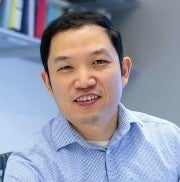 Tian Zhong
Nov
18
2026
-
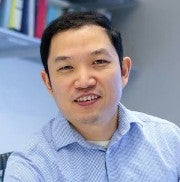
Tian Zhong
Description
The ability to engineer individual quantum systems—atoms, spins, and photons—has transformed quantum science and
enabled rapidly advancing technologies in computing, communication, and sensing. A central challenge for the next stage of
quantum engineering is to move beyond isolated quantum components and create increasingly complex systems in which
distinct quantum degrees of freedom communicate, interact, and collectively generate new functionality.
In this talk, I will describe our efforts to engineer quantum systems across increasing physical scales, beginning with the
material itself. Rather than adapting existing materials to quantum technologies, we pursue a bottom-up approach in which
quantum materials are engineered to provide the coherence, optical functionality, and interfaces required by quantum
devices. Using molecular-beam epitaxy, we have developed rare-earth quantum materials in which telecom-wavelength
erbium spin-photon interfaces combine long optical and spin coherence with compatibility with nanophotonic and
superconducting circuits. These results establish a materials foundation for scalable, optically connected quantum systems.
Building outward from these quantum building blocks, we are developing interfaces that allow fundamentally different
quantum systems to communicate. By exploiting an intrinsic spectral matching between rubidium and erbium, we recently
demonstrated a direct telecom quantum link between atomic and solid-state nodes without quantum frequency conversion.
The network was deployed over 10.6 km of metropolitan fiber in Chicago and extended to 49.2 km in the laboratory while
preserving nonclassical photon correlations. This approach points toward hybrid quantum networks in which different
quantum technologies retain their individual strengths while communicating through native optical interfaces.
Finally, I will briefly discuss how the same philosophy of co-engineering materials and their electromagnetic environment
may open a different frontier. Moving beyond using light to connect quantum systems, we are exploring whether engineered
quantum light can itself become an active ingredient in quantum matter. By integrating quantum materials with nonlinear
photonic resonators and cavity fields, we seek new regimes in which light-matter interactions can be used to probe and
ultimately engineer collective quantum phenomena.
About the Speakers
-
Tian Zhong
University of Chicago
Tian Zhong is an Assistant Professor in the Pritzker School of Molecular Engineering at the University of Chicago and holds a joint appointment at Argonne National Laboratory. He received his ...
Tian Zhong is an Assistant Professor in the Pritzker School of Molecular Engineering at the University of Chicago and holds a joint appointment at Argonne National Laboratory. He received his Ph.D. and M.S. in Electrical Engineering and Computer Science from MIT and was a postdoctoral researcher and IQIM Fellow at Caltech before joining the University of Chicago in 2018.
His research develops quantum materials, devices, and systems for quantum information science, with particular emphasis on rare-earth spin-photon interfaces, integrated quantum photonics, and quantum networks. His group has pioneered epitaxial rare-earth quantum materials, hybrid telecom quantum networks connecting disparate atomic systems, and integrated architectures for photon-memory entanglement. His work has been recognized by the NSF CAREER Award, the U.S. Army Research Office Young Investigator Award, the Argonne Board of Governors' Award, and the Michael D. Sturge Prize for his seminal contributions to quantum nanophotonics.
Location
EER 3.640
For any questions or Zoom link access, please contact Kamela Syed at kamela.syed@austin.utexas.edu